Overview of Bodh Gaya
Bodh Gaya is a very holy place in the world. It is found in Bihar, India, and has profound significance to millions of Buddhists. Most importantly, it is the land where Lord Buddha got enlightened under the well-known Bodhi Tree. Hence, individuals all over the world come to this sacred place with trust and piety.
This place is a shining beacon of peace in the Mahabodhi Temple, which is a UNESCO World Heritage Site. Buddha is thought to have spent several weeks meditating here. This made Bodh Gaya the center of Buddhism. Stated differently, this holy city is a religious place and a place of inner peace and self-discovery.
For example, Sri Lankan, Thai, Myanmar, and Japanese monks frequently congregate here. They recite prayers, meditate, and preach the gospel of love and compassion. Besides, Buddhists are not the only people who can find tranquility in Bodh Gaya.
Above all, the Bodh Gaya Trip helps to make a traveler closer to spirituality. The calmness, the ringing of the temple bells, and the subtle chanting are something you have never experienced before. To explain further, one does not go to Bodh Gaya to see and leave, but to seek inner peace.
In brief, Bodh Gaya is a special combination of culture, faith, and history. Therefore, it still motivates millions to lead a wiser, kinder, and more harmonious life.
Bodh Gaya History
The history of Bodh Gaya is over 2,500 years old. Prince Siddhartha (Gautama Buddha) sat under the Bodhi Tree and meditated. Later, he was enlightened and became the one who started Buddhism.
To begin with, the location became the locus of Buddhist instruction. Indian and other foreign pilgrims started visiting Bodh Gaya shortly thereafter. In the 3rd century BCE, the Mauryan Emperor Ashoka paid a visit. Consequently, he erected the earliest Mahabodhi Temple close to the Bodhi Tree.
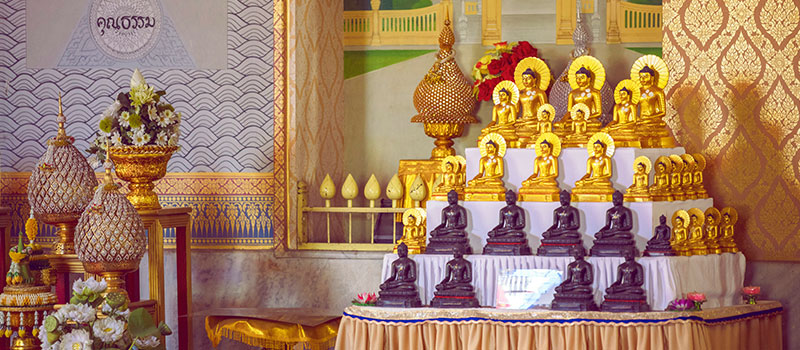
The temple was extended during the Gupta period. Similarly, numerous Buddha statues were made around the complex. However, the site was neglected in later centuries as Buddhism faded in India. Alternatively, Buddhism was revived in the 19th century, and Bodh Gaya returned to worldwide attention.
For example, British archaeologists performed restorations in the 1880s. Subsequently, Bodh Gaya made a comeback on the pilgrimage scene. In addition, the Bodhi Tree, which survives today, is believed to be a descendant of the original tree.
Moreover, monasteries belonging to other Buddhist nations were constructed in Bodh Gaya. As a result, it is an expression of multiculturalism, multilingualism, and multitraditionalism.
All in all, Bodh Gaya is not an object of worship only. In other words, it is the motherland of a philosophy that diffused throughout Asia and the world. Indeed, we can say that its history renders it one of the most significant spiritual landmarks.
Attractions:
Bodh Gaya has many attractions, including its spirituality. Here are the must-visit sites:
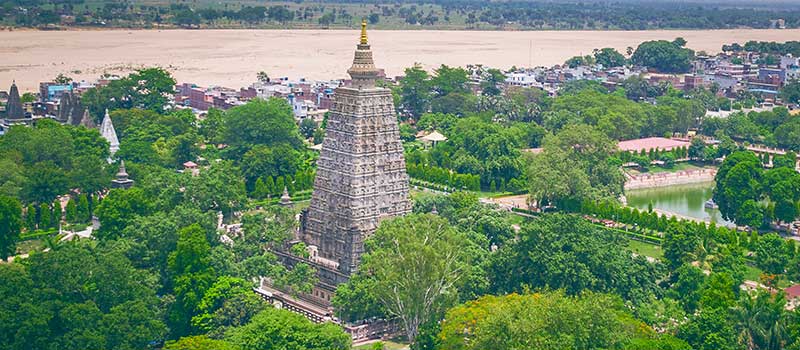
- Mahabodhidharma Temple: A UNESCO World Heritage site constructed by Ashoka.
- Bodhi Tree: The Holy tree upon which Buddha achieved enlightenment.
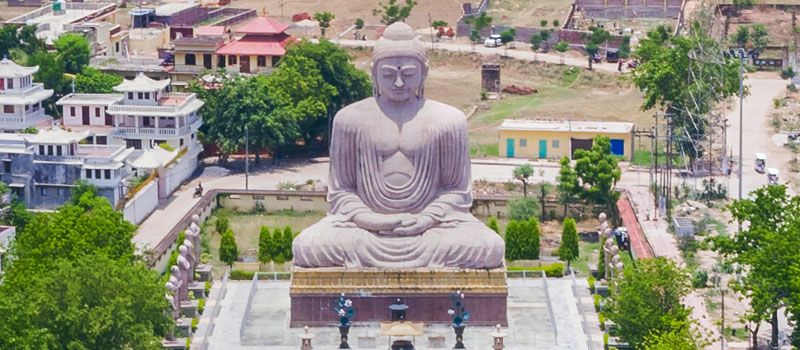
- Great Buddha statue: It is a 1989 built 80 feet tall statue.
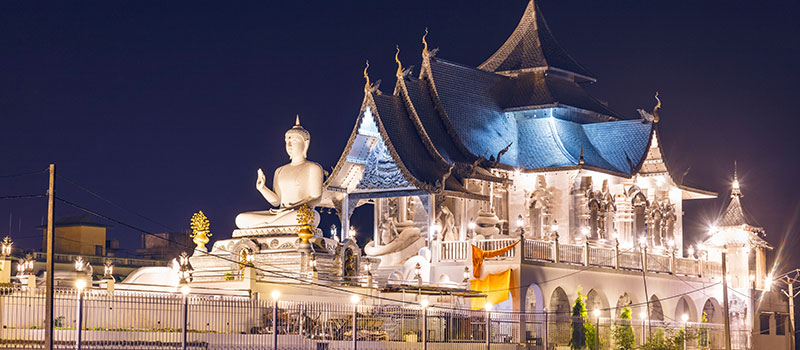
- Thai Monastery: It is a beautiful temple constructed in the traditional Thai style.
- Japanese Temple is characterized by a serene ambience and an enormous prayer hall.
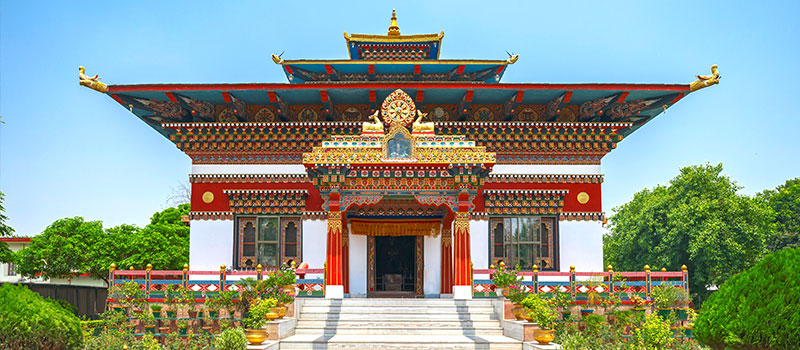
- Royal Bhutan Monastery: It is a beautiful Bhutanese monastery.
- Muchalinda Lake: A serene lake that was associated with the meditation of Buddha.
- Archaeological Museum: Contains ancient relics, statues, and scriptures.