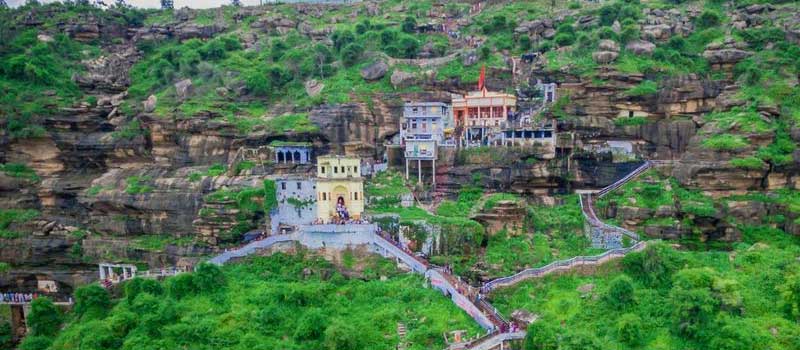
Overview
Chitrakoot is the holiest place in India. The spiritual town is situated on the Madhya Pradesh-Uttar Pradesh border and is highly grounded in Hindu beliefs. Most of all, it is considered the location where Lord Rama, Sita, and Lakshmana stayed and lived in exile for eleven and a half years. Thus, it is an integral part of the Ramayana and the hearts of the followers.
Above all, pilgrims come to Chitrakoot to follow the steps of divine personalities. The town is full of temples, ghats, and caves depicting scenes of the Ramayana. That is, the peaceful area makes Epic stories alive. The hills, temple chants, and rituals observed along the Mandakini River provide the ideal place to be devoted.
Moreover, the religious power of this place can be experienced by all, no matter what religion a person belongs to. It is a place where saints, sages, and seekers have been meditating for centuries. Similarly, numerous individuals find tranquillity, enlightenment, and unity with divinity.
An example is the Kamadgiri Parikrama path, which is highly sacred. Some pilgrims circumnavigate the hill on bare feet in search of blessings. In addition, the town is spiritually active all year round because of local festivals and rituals.
To sum up, a Chitrakootj Trip is not just a visit but also a visit to reconnect with faith, nature, and yourself.
+ Read More
Chitrakoot History
The history of Chitrakoot is religious as well as historical. First, it is called the Hill of Many Wonders, which is very appropriate, given that the country is designed to be closely related to the legends of God. It is conspicuously stated in the Ramayana. Lord Rama decided to dwell in this forest during his exile. This made Chitrakoot the place where many important incidents in the epic occurred.
For example, this is where Bharat encountered Rama and pleaded that he should go back to Ayodhya. The feelings of this emotional moment of reunion are still celebrated here. In addition, Lord Rama conducted the post-rituals of his father, the king of Dasharatha, along the River Mandakini.
Chitrakoot has significance also in Vedic and Puranic literature. Such sages as Atri, Anusuya, and Valmiki inhabited and meditated upon these areas. It thus led to a hub of spiritual studies.
In ancient history, Chitrakoot thrived with its rulers constructing temples and ghats. It was an undisturbed site of saintly men and hermits during the Middle Ages. Nonetheless, the area had faded into obscurity over time until modern pilgrims could rediscover it.
What is more, the town is closely related to Tulsidas, the great poet-saint who wrote Ramcharitmanas. He travelled to Chitrakoot to find some inspiration.
In a word, Chitrakoot not only represents a historical place but also symbolizes devotion, sacrifice, and contact with God.
Attractions:
Chitrakoot is a religious place with mythology and the beauty of nature. It presents some destinations that should not be missed, as they are highly spiritual and beautiful.
- Ram Ghat
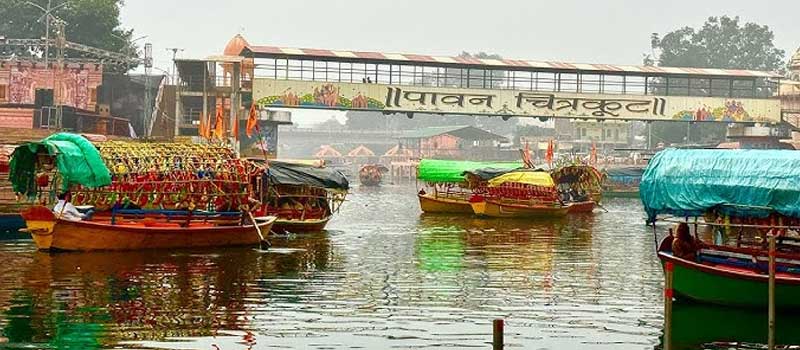
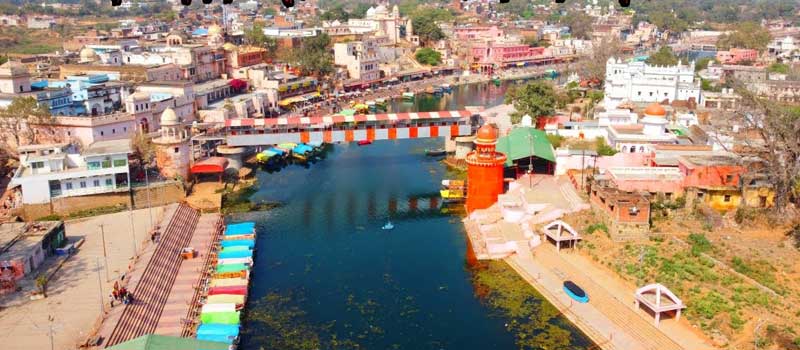
Ram Ghat is a calm site on the bank of the Mandakini River, which is ideal for performing rituals and worship in the evening aarti. It is a perfect place to reflect because of the calm atmosphere.
- Kamadgiri Hill
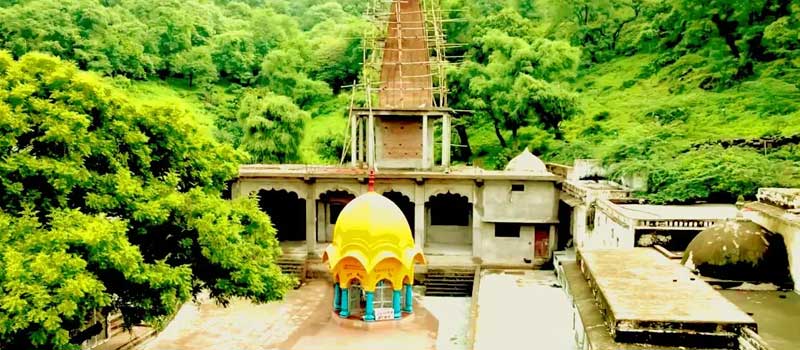
Kamadgiri Hill is regarded as the spiritual center of Chitrakoot, where pilgrims go round it on pilgrimage, called a parikrama (circumambulation), to seek blessings.
- Gupt Godavari
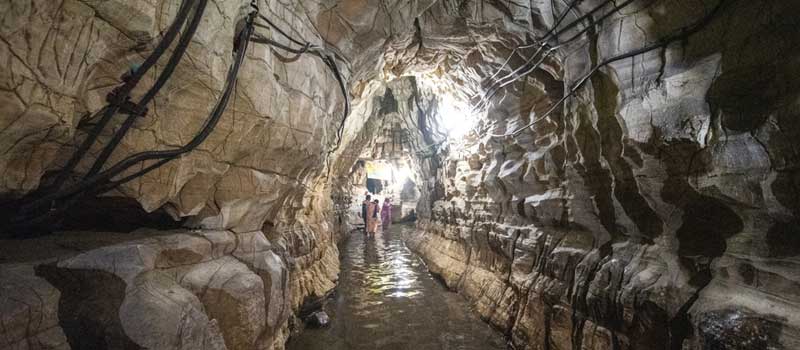
According to belief, these are the twin holy caves where Lord Rama and Lakshmana met secretly when they were in exile.
- Hanuman Dhara
It is a holy waterfall on a hilltop, and it is supposed to have rested Hanuman after he had scorched Lanka. The ascend provides both piety and landscapes.
- Bharat Milap Temple
It is this temple where Bharat met lord Rama to request him to come back to Ayodhya, a moment that has great emotional substance.
- Sati Anusuya Ashram
It is an ashram dedicated to sage Atri and his wife Anusuya, and the ideal ashram to stay, meditate, and learn about spiritual matters.
- Janaki Kund
A serene, beautiful place where Sita is supposed to have bathed in her exile. It is perfect to have calm reflections.