Overview
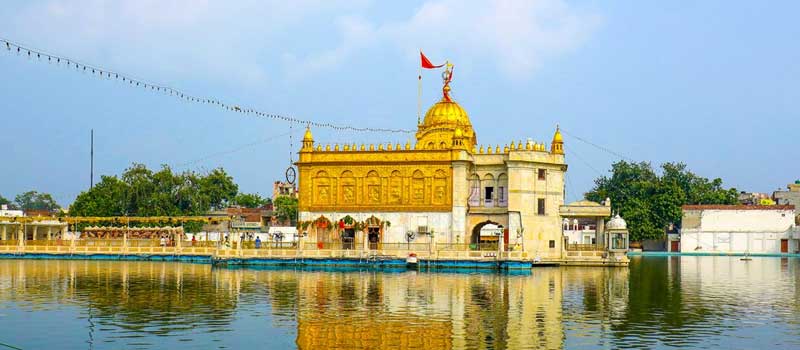
One of the most sacred temples of the Hindu religion in Amritsar, Punjab, is Durgiana Temple. It attracts thousands of followers and tourists annually. Most importantly, this temple honors Goddess Durga, who represents power and security. Nonetheless, it also worships other gods, such as Lakshmi and Vishnu, and thus offers exclusive worship.
The temple is structured like the Golden Temple. It can also be referred to as the Silver Temple because it has silver doors and a special architecture. It has a holy water tank and serene settings surrounded by a spiritual atmosphere that attracts pilgrims of various levels.
Most importantly, worshippers think prayers here respond to wishes and tranquillity. That is to say that the Durgiana Temple is where religion and beauty merge. The bells, the chanting, and the spiritual atmosphere are memorable.
Furthermore, it is a large cultural and religious center in Amritsar. Navratri and Diwali are festivals celebrated in the temple, which will be lit up with lights, music, and rituals during this time. Thus, it turns into a hub of celebration and worship.
Similarly, it is easily accessible since it is at the center of Amritsar. Moreover, tourists usually go there along with visits to the Golden Temple and Jallianwala Bagh.
Conclusively, the Durgiana Temple Trip is a divine combination of history, piety, and architectural splendour. One must visit in case people need blessings and peace in their hearts.
Durgiana Temple History
The Durgiana Temple goes back in its history to the early 20th century. To begin with, it was constructed in 1921 by Harsai Mal Kapoor, who was a famous philanthropist of Amritsar. He intended to build a great temple that rivaled the Golden Temple, but that would be for the Hindus.
Because the temple is inspired by Sikh architecture, it resembles the same gold-domed temple with a sacred sarovar (pond). Nevertheless, it has a much more religious background. It is thought that there was a temple even in ancient times on the site. According to some sources, an original temple existed during the era of Ranjit Singh.
Above all other things, the existing temple worships Goddess Durga in her different forms. Moreover, it even has Lakshmi, Vishnu, and Hanuman Ji shrines. Consequently, it amalgamates Shaivite, Vaishnavite, and Shakta ethos.
Moreover, the temple also strongly influences religious feasts in Punjab. Navratri is a festival during which special rituals are undertaken for nine days. In the meantime, thousands come out to situate diyas and sing hymns to Durga.
Furthermore, the Durgiana Committee, the body dealing with the temple's management, also promotes charities, schools, and cultural activities. The temple is, therefore, used to promote spiritual and social purposes.
Similarly, it is associated with fidelity and integrity. To sum up, the history of Durgiana Temple is about building it and how it links generations using faith and service.
Attractions:
Durgiana Temple in Amritsar is not just a place of worship but a serene blend of spirituality, architecture, and tradition. Its calm atmosphere and divine energy attract both devotees and tourists alike.
- Main Shrine of Goddess Durga
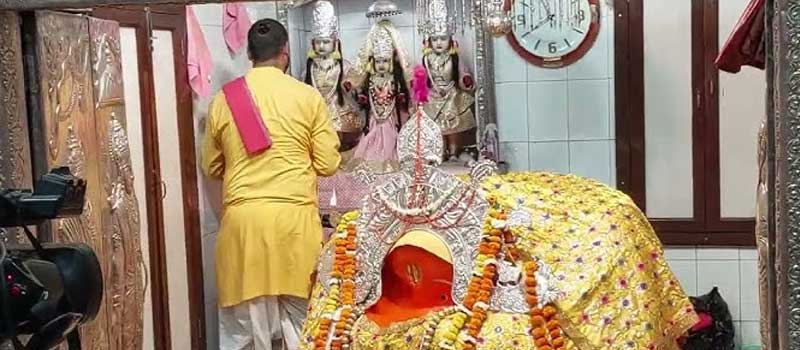
At the heart of the complex, the idol of Goddess Durga stands tall in her powerful yet compassionate form. A sacred tank surrounds the shrine, adding to its divine charm.
- Silver Doors and Interiors
Often called the “Silver Temple,” the Durgiana Temple features stunning silver-carved doors and interiors. These intricate designs reflect devotion and craftsmanship.
- Sacred Sarovar (Tank)
Encircling the temple is a holy water tank where pilgrims take a dip for spiritual purification and blessings.
- Vishnu and Lakshmi Mandir
The complex also houses shrines for Lord Vishnu and Goddess Lakshmi, offering visitors a chance to seek blessings from other deities.
- Hanuman Mandir
A small yet significant shrine for Lord Hanuman, where devotees come to pray for courage and protection.
- Evening Aarti Ceremony
The daily evening aarti fills the space with chants, bells, and glowing diyas, creating a profoundly spiritual experience.
- Festival Celebrations
During Navratri and Diwali, the temple transforms with lights, flowers, and festive spirit, drawing thousands of visitors.