Dwarka Travel Guide

  • Best time to visit:
    October to March
  • Ideal Duration:
    2-3 days
  • Visa:
    Not Required
5.0 - Excellent in TripAdvisor
Recommended by 99% of travelers
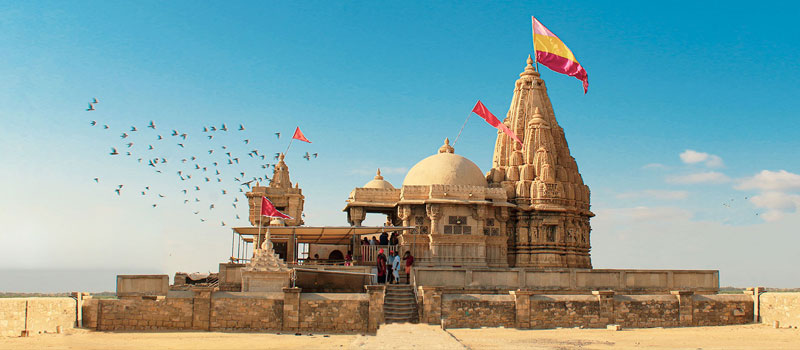
Dwarkadhish Temple
Dwarkadhish Temple
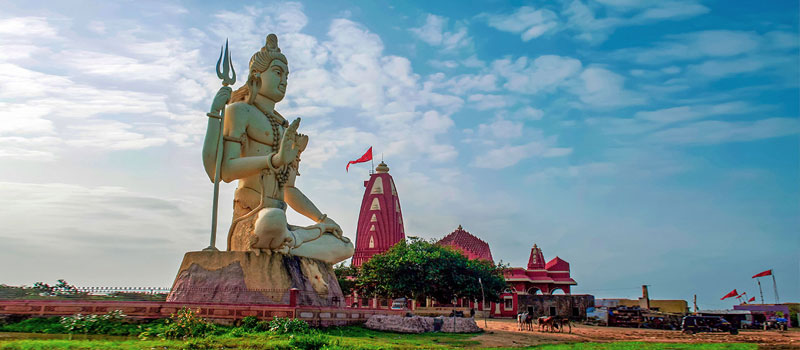
Nageshwar Jyotirlinga
Rukmini Devi Temple
Rukmini Devi Temple
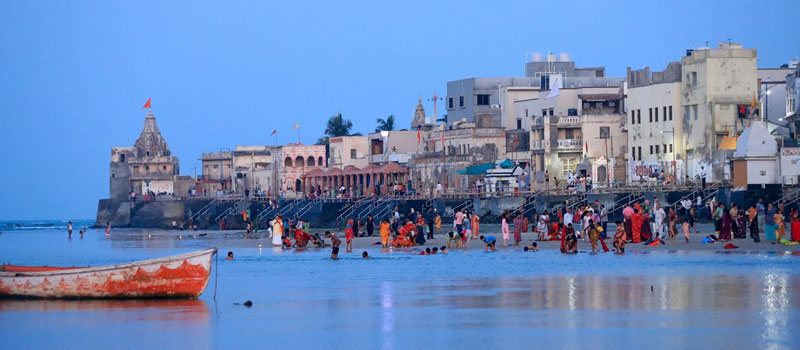
Gomti Ghat
Gomti Ghat
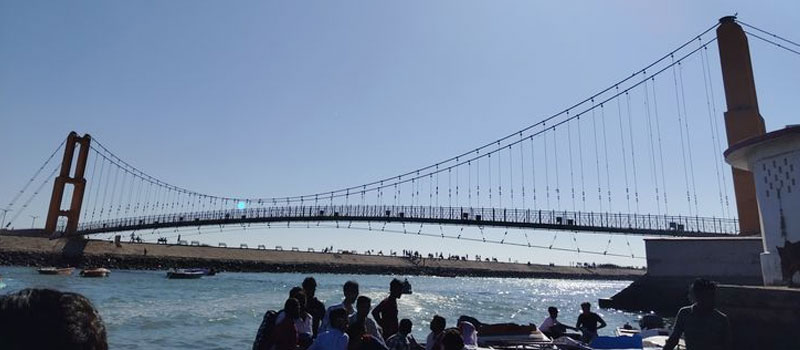
Sudama Setu
Sudama Setu

Dwarka

  • Temperature :
    Summer: March to June: 25°C to 42°C
    Monsoon: July to September: 24°C to 33°C
    Winter: March to June: 12°C to 28°C
  • Top Tourist Places:
    Dwarkadhish Temple, Nageshwar Jyotirlinga, Rukmini Devi Temple, Gomti Ghat, Bet Dwarka, Sudama Setu, Okha Port, Dwarka Lighthouse

About Dwarka

One of the most essential spiritual cities in India is Dwarka, which all spiritual seekers must visit. It is considered one of the Char Dham pilgrimages with Badrinath, Puri, and Rameswaram. Thus, it is highly significant to Hindus. It is supposed that the city is the former kingdom of Lord Krishna, and it is a place of devotion, history, and cultural richness.

Most of all, Dwarka hosts the well-known Dwarkadhish Temple, which millions of worshippers visit annually. In other words, the temple symbolizes an enduring relationship between the worshipers and Lord Krishna. Moreover, the holy Gomti River and the Arabian Sea make this sacred land all the more beautiful. For example, pilgrims usually bathe in Gomti ghat and then proceed to the temple.

Most importantly, the city combines mythology with spirituality. Individuals think that Dwarka is a place that cleanses sins and is a blessing. It has therefore emerged as one of the best pilgrimage sites among pilgrims both in India and elsewhere. That is, a Dwarka trip is a spiritual journey as well as a voyage of exploration.

Dwarka History

Dwarka has a legendary history that is deeply attached to Lord Krishna. According to ancient scriptures, it is the kingdom in which Krishna was the ruler after leaving Mathura. They say that he constructed the city itself, one of India's pioneer planned cities.

The Mahabharata says that Dwarka was a golden city with magnificent palaces and gardens. But it is believed that the city went under the sea after Krishna had died. Archeological research has also shown the underwater structures around the present-day Dwarka, indicating the lost city's association. Dwarka has been, therefore, recognised as a place of historical and religious significance.

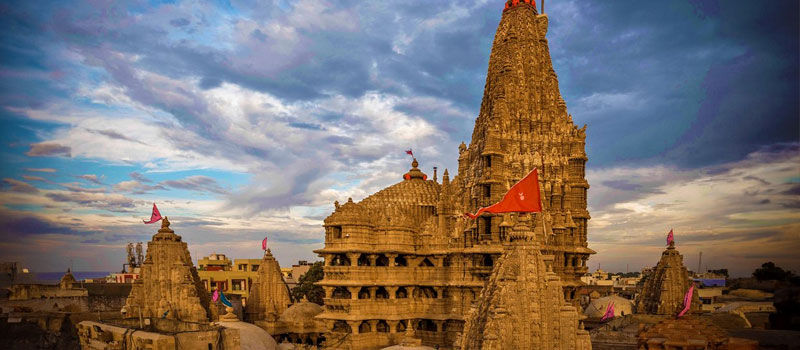
Dwarkadhish Temple, constructed in the 16th century, is a religious and architectural masterpiece. In addition, the city has remained an integral part of the Puranas and other spiritual books. Dwarka combines mythology, faith, and history as a single strong story. Most importantly, it is an eternal witness to the presence of Lord Krishna.
Attractions:

Dwarka is a destination that is full of faith and curiosity.

  • Dwarkadhish Temple: This is Lord Krishna's temple, which is the city's main attraction.
  • Nageshwar Jyotirlinga: It is one of the twelve holy Jyotirlinga of Lord Shiva.
  • Rukmini Devi Temple: The Temple is dedicated to Krishna and his queen Rukmini.
  • Gomti Ghat: Sacred bathing place where worshipers bathe.
  • Bet Dwarka: An island temple considered to be Krishna's home.
  • Sudama Setu: A foot walk bridge between Dwarka and the ghats of God.
  • Okha Port: Provides sea travel to Bet Dwarka and beautiful sea scenes.
  • Dwarka Lighthouse: A contemporary sightseeing location that will provide the best view of the Arabian Sea.

Getting There

By Train Dwarka

By Train

Dwarka Railway Station is well linked to such major cities as Ahmedabad, Rajkot, Jamnagar, and Vadodara. Travel is easy by frequent express and passenger trains. Autos and taxis can be hired at the station to visit temples and hotels.

By Air Dwarka

By Air

The closest airports are Jamnagar, which is approximately 137 km away. It is linked to such cities as Ahmedabad and Mumbai. A taxi or a bus can be hired to get to Dwarka from Jamnagar. Instead, airports in Rajkot and Porbandar are also well connected.

By Road Dwarka

By Road

State highways also connect Dwarka. Gujarat State Road Transport Corporation (GSRTC) serves buses in Ahmedabad, Rajkot, Jamnagar, and Somnath. There are also comfortable, luxury buses and private taxis. In addition, the scenic tour along the coastline makes the trip enjoyable.

Best Time to Visit

Summer Season in Dwarka

Summer (March to June):

Dwarka is hot during the summer, and the range of temperatures is between 24 °C and 40 °C. Afternoons are hot, but evenings and mornings are pleasant for visiting temples and taking small tours. When traveling around this period, wear light cotton and carry hats and plenty of water to keep you hydrated. The devotees nonetheless come to Dwarkadhish Temple despite the heat, particularly during the religious festivals.

Monsoon Season in Dwarka

Monsoon ( July to September):

Monsoon season leads to moderate to heavy rain that cools down the city and makes it greener. The Arabian Sea is especially stunning at this time, enhancing the coast. However, heavy rainfall can occasionally interfere with sightseeing or intra-city travel. Nevertheless, the season is much more spiritual and can be enjoyed by individuals who need tranquility.

Winter Season in Dwarka

Winter (October to February):

Winter is undoubtedly the most appropriate time to visit Dwarka. The weather is pleasant with temperatures of 10 °C- 25 °C, making it suitable to sightsee, visit temples, and walk on the beach. The city has vibrant and energetic attendees for festivals such as Janmashtami. Overall, winter is a nice mix of a good time and the spirit of the festivities, so that one can have a full experience.

RECOGNIZED AND ACCREDITATION

ministry of tourism
TAAI - Certificates
IATA - Certificates
patners