Overview of Ellora & Ajanta Caves
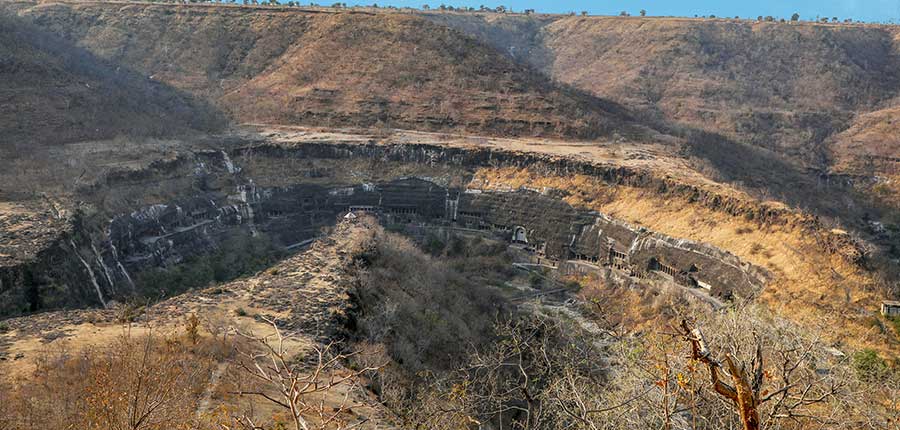
Some of the best examples of ancient Indian art and spirituality are the Ellora and Ajanta Caves, which are situated in Maharashtra. Most importantly, these caves are not only architectural marvels, but also places of prayer and contemplation. They are carved in solid rocks and demonstrate the Buddhist, Hindu, and Jain traditions, which makes them unique in terms of diversity and heritage.
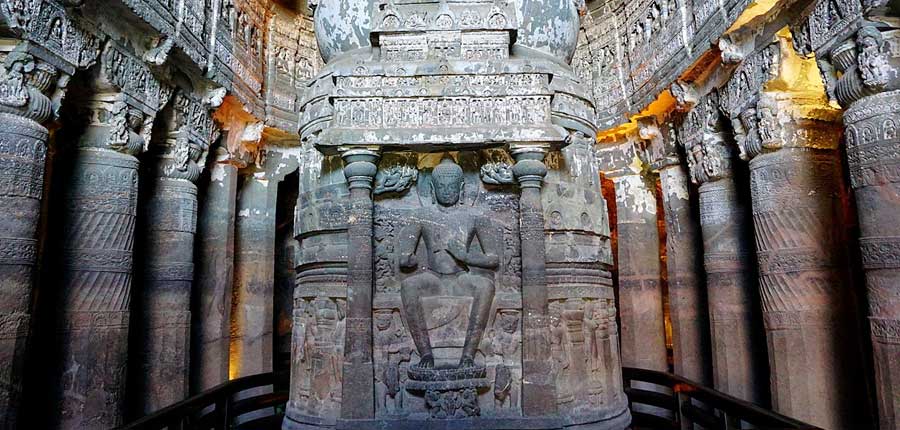
Most importantly, the Ajanta Caves with their enthralling murals and paintings manifest the lives and teachings of Lord Buddha. In other words, the caves were used as monastic retreats of Buddhist monks. Similarly, the Ellora caves depict interfaith co-existence with Buddhist, Hindu, and Jain temples next to each other
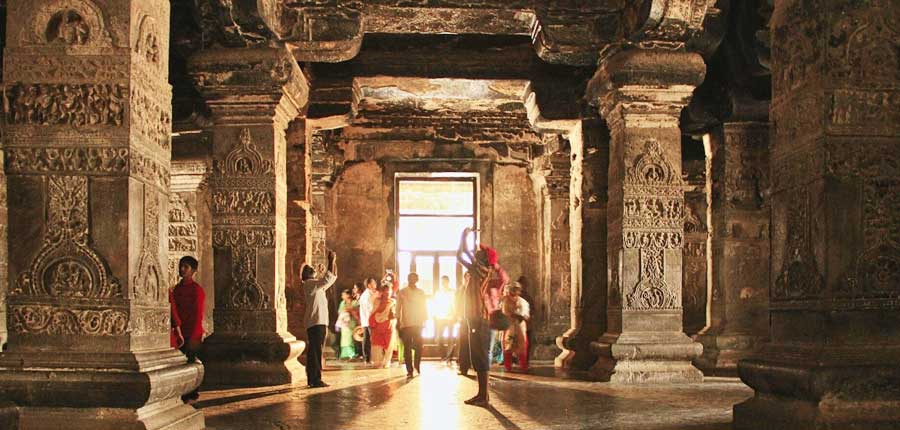
As such, the two places are symbols of solidarity, religion, and artistic mastery. That is, the caves are not merely monuments, but still alive representations of the cultural soul of India. For example, pilgrims, historians, and visitors derive a lot of spiritual and cultural significance from their visit.
Therefore, the experience at these UNESCO World Heritage sites is enlightening and inspirational. Most of all, an Ellora and Ajanta Caves Trip is an unparalleled experience of the ancient wisdom, art, and religious aspect of India.
Ellora & Ajanta Caves History
The Ellora and Ajanta Caves are centuries old and are part of Indian civilization. The Ajanta Caves were painted between 2 nd century BCE and the 6th century CE. These caves were monasteries and prayer halls as well as learning centers of Buddhist monks. Further, their beautiful paintings recount the Jataka stories, which show the life and teachings of Lord Buddha.
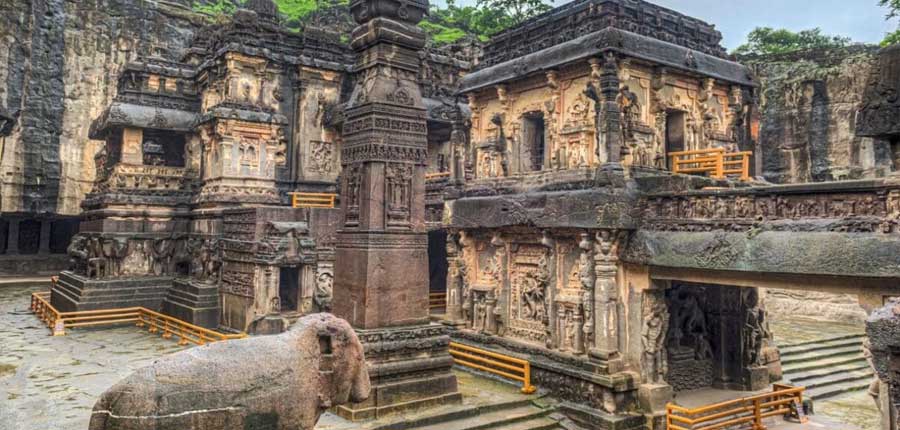
Conversely, the Ellora Caves, chiseled in the 6th to the 10th century, mirror the harmony of religion. First, 12 Buddhist shrines, 17 Hindu temples, and 5 Jain caves are in the caves. Secondly, there is the most popular, the Kailasa Temple, which was devoted to Lord Shiva and was hewn out of one rock. It is considered one of the best architectural marvels in the world.
Above all, the Satavahanas, Rashtrakutas, and Chalukyas were mighty dynasties that patronized Ajanta and Ellora. These caves were a long-lasting symbol of devotion and art because their rulers funded the construction.
To sum up, Ajanta and Ellora's history is the history of architecture, cultural amalgamation, religion, and artistic mastery that has influenced people.