Overview of Grishneshwar
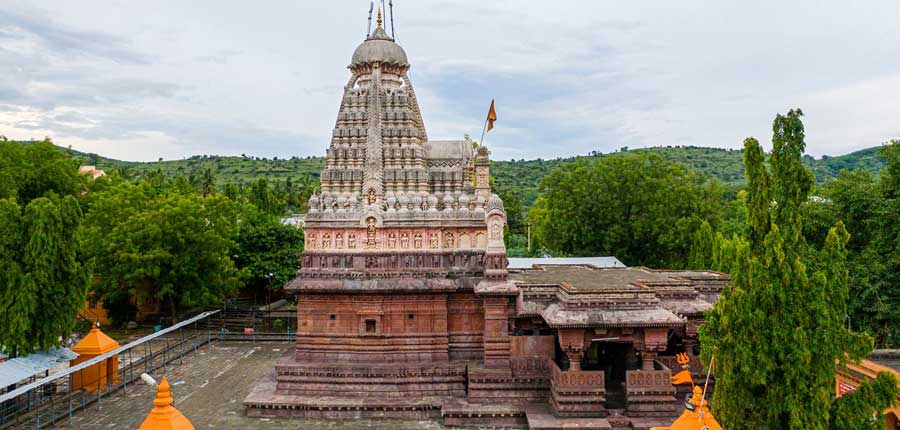
Grishneshwar Temple is one of the twelve sacred Jyotirlingas of God Shiva, situated near Ellora in Maharashtra. Most of all, it is regarded as a venue of great piety and spirituality. Visitors come here to get blessings and to offer sacred rituals performed by pilgrims from all parts of the country.
It is believed that the temple satisfies the desires and eliminates badness. In other words, the devotees view a pilgrimage to this temple as a way to salvation and peace. That is, Grishneshwar is a very high-ranking person in the Hindu traditions. Simple and powerful, the sanctum has a halo of divine serenity.
Above all, the believers feel that Lord Shiva is actually here as a Jyotilinga to bless all believers who come with their faith. Moreover, the temple is a significant feature of both spirituality and heritage because it is located near the Ellora Caves.
Most importantly, the Grishneshwar Temple remains a vital pilgrimage site among pilgrims, especially during the Shravan month and Mahashivratri. That is why Grishneshwar Trip can provide not only a strong spiritual experience but also an opportunity to learn about the rich Indian historical experience and the cultural depth of this country.
Grishneshwar History
Grishneshwar Temple has a very strong mythological and traditional background. Legends say that a pious woman called Kusuma worshiped Lord Shiva here by immersing the Shiva Linga in water daily. Her religion saw the emergence of Lord Shiva, who sanctified the location as one of the Jyotirlingas. It was, therefore, a holy place of worship.
The temple was destroyed several times in history as an invasion occurred. Nonetheless, it was restored repeatedly and portrayed the indestructible loyalty of believers. Above all, the building was rebuilt in the 18th century by Ahilyabai Holkar, Queen of Indore, who restored other well-known temples in India.
The architecture has a beautiful reflection of the South Indian and Maratha style, where the construction was done with red volcanic rock. The temple walls are decorated with large pieces of sculpture and carving, which tell tales of Hindu epic stories. For example, scenes of the Ramayana and Mahabharata are perfectly captured here.
The Grishneshwar Temple is a masterpiece of history and spiritual importance, symbolizing strength, faith, and architecture.
Attractions:
Tourists and pilgrims can see several sites when visiting Grishneshwar:
- Grishneshwar Jyotirlinga: This is the principal sanctum of Lord Shiva.
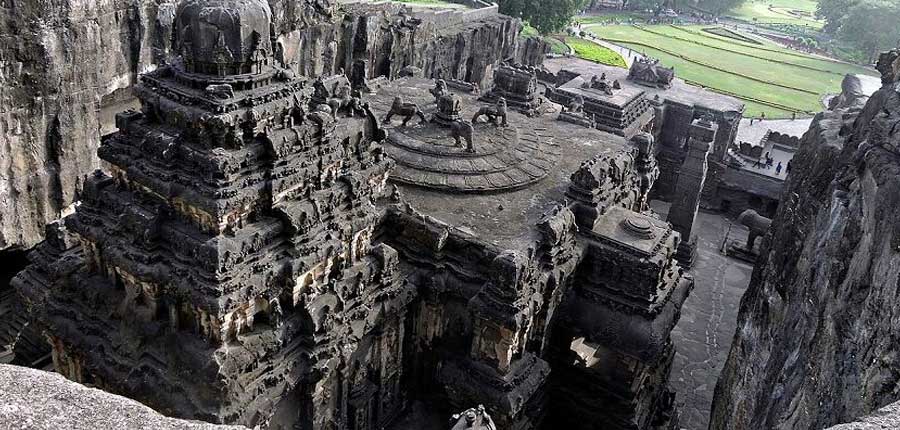
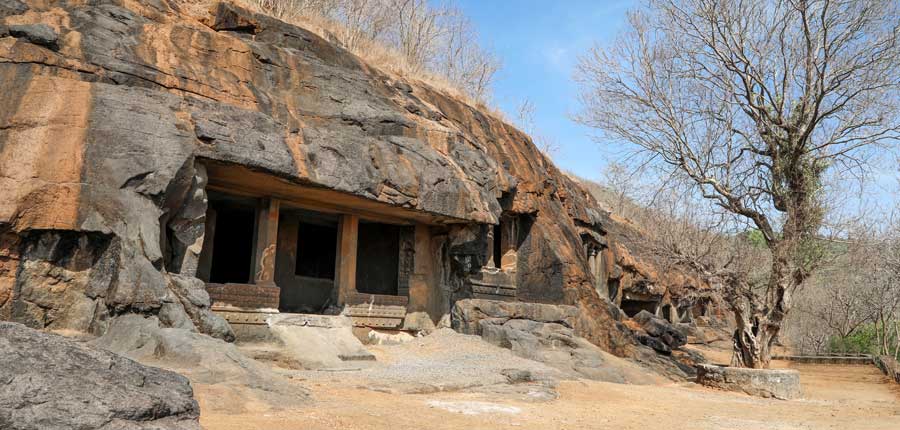
- Ellora Caves are a UNESCO World Heritage site in the vicinity.
- Daulatabad Fort - One of the historic forts, approximately 20 km away.
- Aurangabad Caves – Rock-cut Buddhist shrines close to the city.
- Kailasa Temple – A marvel of rock-cut architecture within Ellora.
- Bhadra Maruti Temple – Dedicated to Lord Hanuman.
- Local Festivals - Celebrations in the Shravan month and the Mahashivratri.
- Sculptures and Carvings: The temple walls were covered with mythological tales.