Overview of Kamakhya
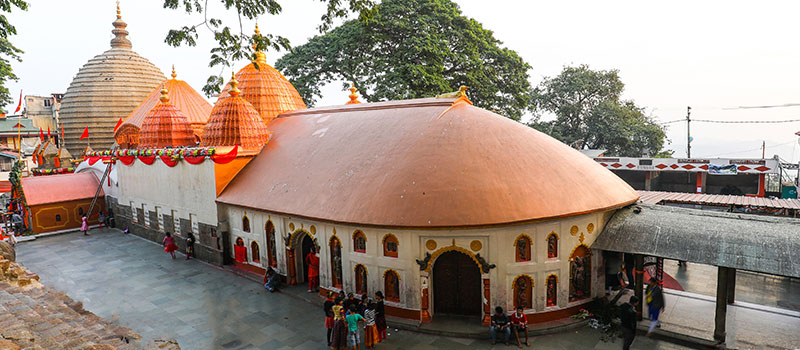
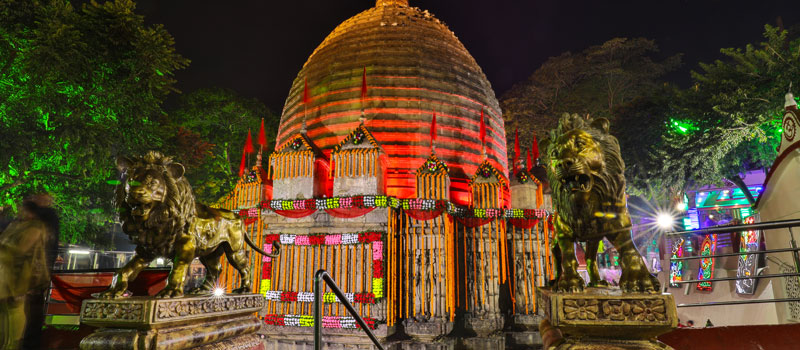
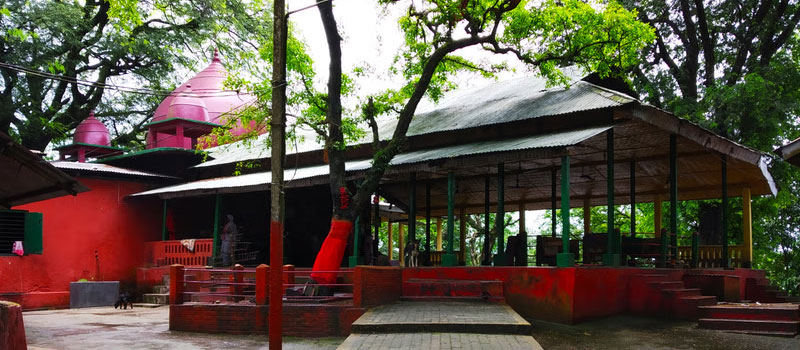
Kamakhya Temple is a very sacred temple in India. It is found on Nilachal Hill, Guwahati, Assam. It is essential in Hinduism because it is devoted to a powerful form of Goddess Shakti, the Kamakhya goddess. The temple is a symbol of the power of the Goddess, so pilgrims and devotees consider it an essential element of the Shakti Peeths. Most importantly, the temple is particularly distinguished by a vital festival, Ambubachi Mela, which is held by thousands of followers all over India.
Individuals come to the temple not only to pray but also to have a powerful connection with God. The yoni of Goddess Sati can be found in the sanctum sanctorum of the temple, which is a symbol of fertility and creation. Consequently, the married people who want to get blessings to have children and the families that wish blessings to prosper usually visit here.
Rituals that are unique to the temple, as well as the mystical aura of the temple, make it one of the holiest pilgrimage sites in the country. Followers experience a tremendous peace and satisfaction upon paying a visit. As a result, Kamakhya Temple has been turned into a religious center where religion, spirituality, and tradition merge. Many people regard a Kamakhya Temple Trip as more than a religious venture but also a profound emotional experience that they will never forget in their lives.
Kamakhya Temple History
The history of the Kamakhya Temple is centuries old, and it is composed of mythology, legends, and facts. Above all, it is among the oldest Shakti Peeths of India. Hindu mythology states that when Goddess Sati committed suicide and Lord Shiva took her body, her body parts fell within the Indian subcontinent. The origin of this temple is thought to be in the fall of the yoni, which represents the power of the woman at Nilachal Hill.
The earliest mention of the Kamakhya Temple is in ancient inscriptions dated 4th century CE during the Gupta period. It later became famous in the Kamarupa kingship. The king Narakasara and other monarchs who followed him favored the temple, and it emerged as a significant hub of Tantric cults.
The first temple building was, however, destroyed in the 16th century as a result of an invasion. It was later reconstructed in 1665 by King Nara Narayan of the Koch dynasty, who was assisted by his general, Chilarai. The temple was rebuilt, and it was still considered to be a holy place of worship and pilgrimage.
Moreover, Tantric rituals were also practiced in the temple, which is still practiced with dedication nowadays. In a few words, the Kamakhya Temple represents a mix of mythology and history, as India has a spiritual background.