Overview of Kanchipuram
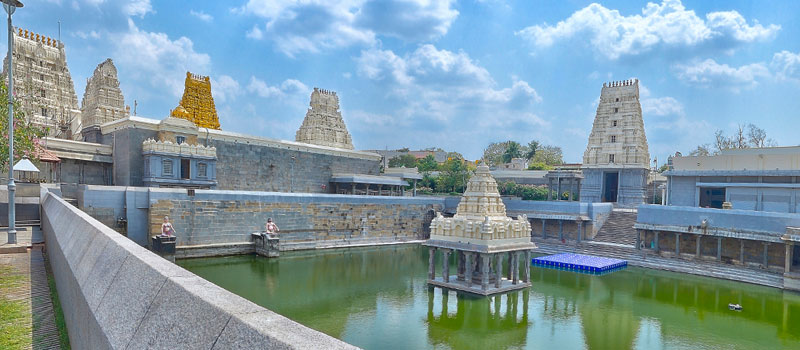
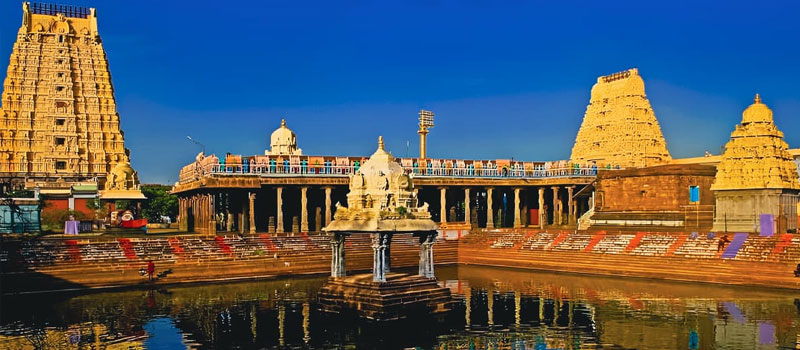
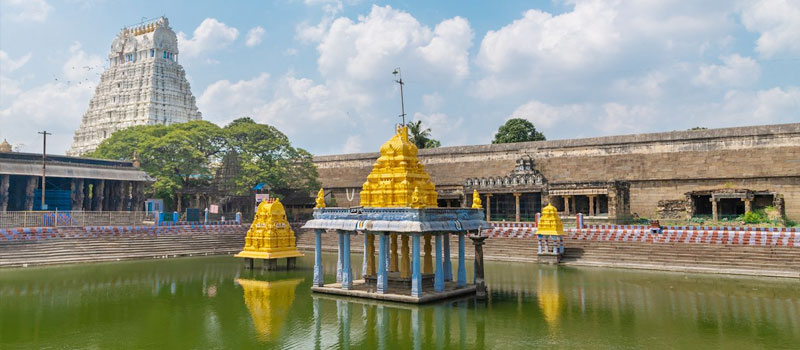
Kanchipuram is one of the seven sacred cities in India, commonly referred to as the City of Thousand Temples. Most importantly, it is of great religious significance in Jainism and Hinduism. And most importantly, it is regarded as a Mokshapuri, a sacred site where souls get liberated. Thus, pilgrims are convinced that visiting this place will bring them spiritual tranquillity and divine blessings.
Lord Shiva and Lord Vishnu are the principal deities of the town. An example is the Kanchi Kamakshi Amman Temple and Varadaraj Perumal Temple, which are worshipped in the entire nation. The city is filled with songs, ceremonies, and worship. As a result, pilgrims visit this site all year round to observe its majesty.
Kanchipuram is not all temples. Similarly, its silk sarees are also popular across the world. Kanjivaram sarees are a representation of tradition and grace. In addition, numerous workshops in the city streets exhibit this centuries-old art.
Of course, a Kanchipuram Trip is not only a religious experience. It also links visitors to the heritage, colorful festivals, and peaceful environment. Put simply, it is a place where religion, history, and tradition are united.
Kanchipuram History
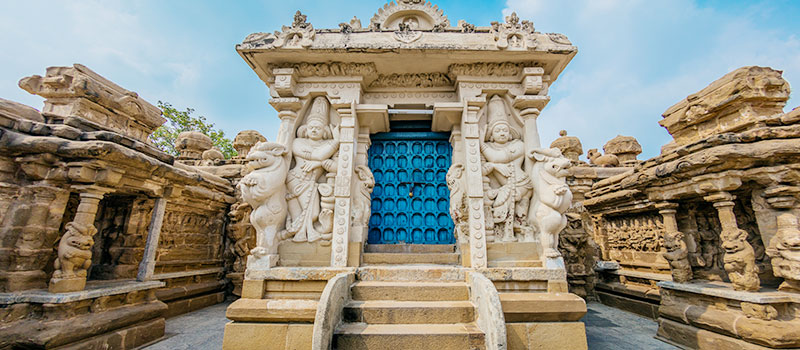
Kanchipuram has a rich history. First, it was formerly the capital of the Pallava dynasty between the 4th and 9th centuries. Some of the temples that they constructed are still standing today. Second, it was developed by later rulers such as the Cholas, Vijayanagar kings, and Nayaks.
Kanchipuram emerged as a great seat of learning during the Pallava period. For example, it was called a seat of Sanskrit and Tamil learning. It was also a centre of spiritual diversity as Buddhism and Jainism flourished here. In other words, the city was formerly known as Ghatikasthanam, a seat of learning.
In addition, Chinese traveller Hiuen Tsang came to Kanchipuram in the 7th century and wrote that it was a place of prosperity and wisdom. Then, under the Chola regime, the city developed even further, and more temples were built, and culture was developed.
Nevertheless, invasion problems during medieval times did not eliminate Kanchipuram as a seat of devotion. Similarly, Vijayanagar kings restored and constructed numerous temples. Similarly, the British later joined it to the Madras Presidency, but the spirit remained the same.
To sum up, the history of Kanchipuram was not only about those who ruled but also saints, scholars, and devotees who preserved the heritage of this place.