Overview of Kashi Vishwanath Jyotirlinga
Kashi Vishwanath Jyotirlinga is among the holiest temples of Shiva. It is situated on the shores of the sacred River Ganga in Varanasi, Uttar Pradesh. The temple is the spiritual centre of India. Most importantly, it is one of the twelve Jyotilingas. Thousands of devotees come to visit this temple every day in order to be blessed and have peace.
Vishwanath is translated as a ruler of the Universe. Lord Shiva of this temple is referred to as Vishweshwara Mahadev. The temple is a representation of the endless power and emancipation. Visiting this place, they say, destroys sins, and moksha is achieved. Thus, the temple is among the most significant pilgrimage locations for Hindus.
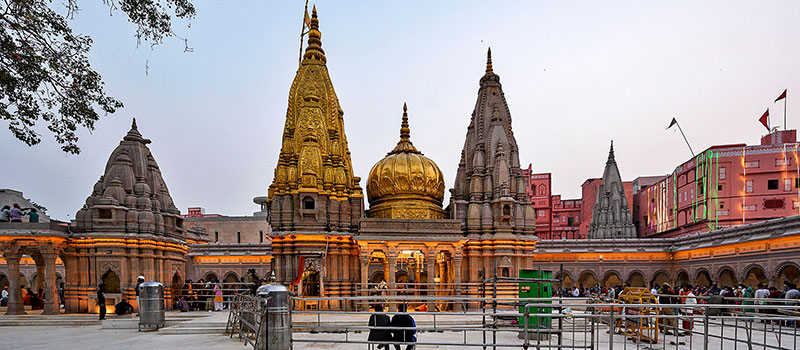
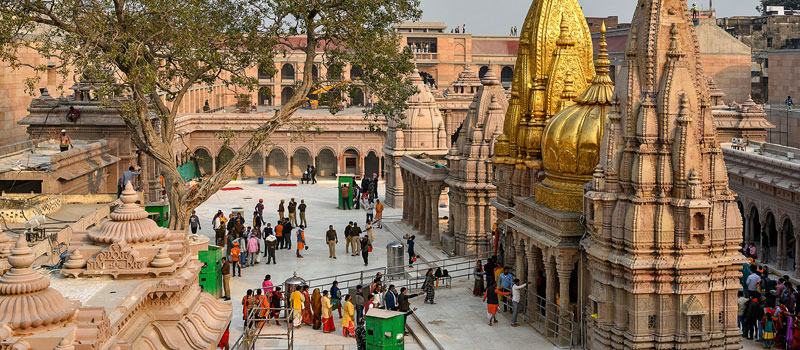
The temple sanctum has the Jyotirlinga on a silver altar. The tower on top of the sanctum has pure gold glowing in the sun. It is one of the main attractions for devotees in this golden dome. Moreover, there are also some small shrines in the temple of various gods and goddesses.
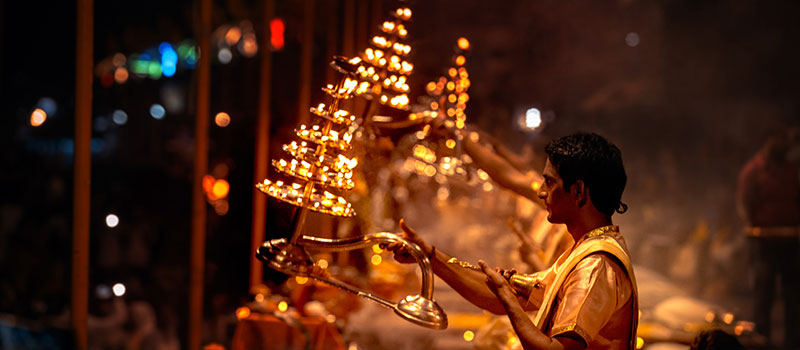
Lakhs of devotees come here every year in Mahashivratri. Varanasi is a glowing city that is filled with devotion and celebration. Likewise, the month of Shravan also draws very large numbers of people. Divine energy is generated by rituals such as Ganga Aarti, Rudrabhishek, and the reciting of mantras.
The reason why people go to Kashi Vishwanath Jyotirlinga:
- Among the twelve Jyotilingas of Lord Shiva.
- Located in Kashi, the city of salvation.
- Golden Shikhara is a perfect beauty.
- Divine experience comes with powerful rituals and daily aartis.
- Near the river Ganga, which adds to its holiness.
That is, Kashi Vishwanath Jyotirlinga is not just a temple but the supreme spiritual object of the seekers of peace, power, and liberation.
Kashi Vishwanath Jyotirlinga History
Kashi Vishwanath Jyotirlinga has a long and eventful history. The temple has been ruined and reconstructed on a number of occasions. But its glory and importance have never been diminished.
This temple is mentioned first in the Skanda Purana. It tells how Kashi is the most holy city on earth and how the temple of Vishwanath is in the middle. The initial frame of the temple was created several centuries ago. It was, however, destroyed by the army of Qutb-ud-din Aibak in the year 1194 CE.
It was subsequently reconstrued by Hindu kings. It was, however, destroyed much more during the Mughal period. In the year 1669 CE, the Emperor Aurangzeb destroyed the temple and constructed a new Gyanvapi Mosque on its location. The mosque structure still retains the old temple.
Later on, the temple was reconstructed once again in the 18th century. Ahilyabai Holkar, the queen of Indore, had the present-day temple built in 1780. She rebuilt the temple to what it was. After which, in 1839, Maharaja Ranjit Singh of Punjab gave a gold donation amounting to one ton to cover the temple shikhara (spire). Consequently, the temple is also known as the Golden Temple of Varanasi.
As time passed by, other kings such as the Scindias, the Holkars, and the Bhosales contributed to the temple as well. They contributed towards the expansion and upkeep of the temple through their contributions. The temple complex of modern times contains numerous smaller shrines and halls.
Essential points in history:
- The holiest temple in the Skanda Purana.
- Razed in 1194 CE by Qutb-ud-din Aibak.
- Once more, it was destroyed by Aurangzeb in 1669 CE.
- Reconstructed in 1780 by Queen Ahilyabai Holkar.
- Maharaja Ranjit Singh added the golden dome in 1839.
Concisely, the temple has undergone numerous destructions. Nevertheless, it is a powerful icon of religion today.