Overview of Mallikarjuna Jyotirlinga
Mallikarjuna Jyotirlinga is among the strongest and most pious of Jyotirlingas of Lord Shiva. It is situated on the banks of the River Krishna, Srisailam, Andhra Pradesh, and is in the midst of the Nallamala Hills. Such a temple is also referred to as the Kailash of the South. Goddess Parvati and Lord Shiva are some of the most divine centers of worship in India, which makes this place very divine.
There is high spirituality in the temple. It purifies sins and provides a soul with peace. Most importantly, it gives firsthand blessings of Lord Shiva and Goddess Parvati. Any worshipper who arrives here experiences purity, power, and heavenly joy.
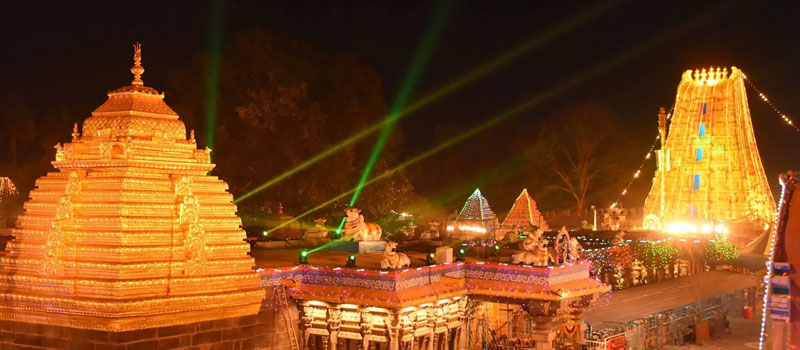
The temple has lakhs of visitors during the Shravan and Mahashivratri months. In these periods, prayers, chants, and rituals pervade the whole temple complex. The power is strong and inspirational. On the same note, the temple ceremonies bring happiness and fulfillment to believers with each passing day.
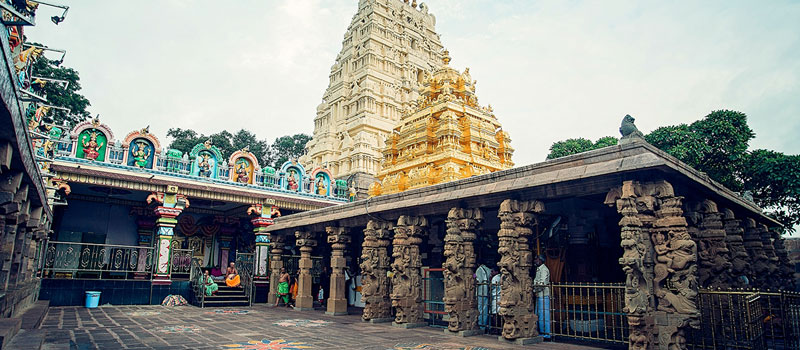
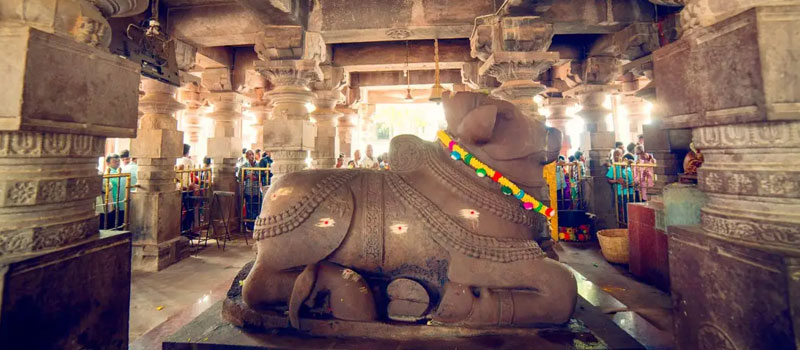
The temple is architecturally a masterpiece. The high Raja Gopuram (central tower) is carved with beautiful carvings of gods and stories of divinity. There are inscriptions on the walls dating back to ancient times. The sanctum contains the holy Jyotirlinga of Lord Mallikarjuna and the shrine of Goddess Bhramaramba, who is a major Shakti Peeth.
The temple is significant because:
- Shiva and Parvati are present together.
- A Jyotilinga and a Shakti Peeth.
- Gets rid of sins and bestows moksha (salvation).
- Festivals such as Mahashivratri are able to attract lakhs of worshippers.
- Divine blessings to everyone are an everyday guarantee through sacred rituals.
That is, going to Mallikarjuna Jyotirlinga is the same as going to Lord Shiva and goddess Parvati in a single location. Most importantly, it provides worshipers with the utmost spiritual satisfaction.
Mallikarjuna Jyotirlinga History
Mallikarjuna Jyotirlinga is rich in terms of divine happenings and royal patronage. The name of the temple is based on the two words: Mallika (Parvati goddess) and Arjuna (Lord Shiva). It is the symbol of Shiva and Parvati's everlasting marriage.
The ancient scriptures detail that one day, Lord Kartikeya, the son of Shiva and Parvati, left Mount Kailash and remained on the hills of Srisailam. Shiva and Parvati also approached Srisailam to get near him. This was their permanent home as a result. This is why we find both Shiva and Parvati, such as Mallikarjuna and Bhramaramba.
Numerous Puranas have referred to the temple. It has been a renowned pilgrimage centre since prehistoric times. The temple was patronized by the Satavahana dynasty between 2 nd century BCE and 2 nd century CE. Subsequently, the Chalukyas, Kakatiyas, and Vijayanagara kings extended it. These rulers added the large gopurams, mandapams, and carvings.
The temple was attacked on several occasions, especially in the 14th century. But later kings regained their brilliance. The Vijayanagara kings especially made the temple tough and prettier. They gave their money, precious stones, and land so that it could be developed. These contributions are proven in inscriptions within the temple.
Important historical highlights:
- It is listed in the early Puranas as a heavenly dwelling.
- Constructed and nurtured by the Satavahana dynasty.
- The creation of the Chalukya and Kakatiya rulers.
- Reconstructed by Vijayanagara monarchs in the 14th century.
- Has a Jyotirlinga and a Shakti Peeth.
To explain, the temple can be described as a mixture of both faith and history. Most importantly, it has been a strong representation of devotion, which has existed for thousands of years.