Nalanda Travel Guide

  • Best time to visit:
    October to March
  • Ideal Duration:
    2-3 days
  • Visa:
    Not Required
5.0 - Excellent in TripAdvisor
Recommended by 99% of travelers
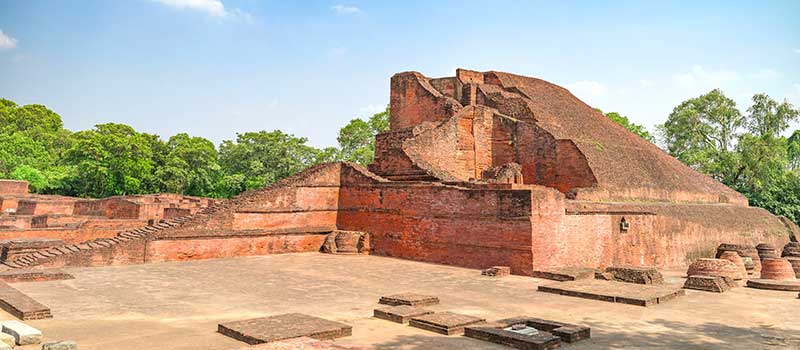
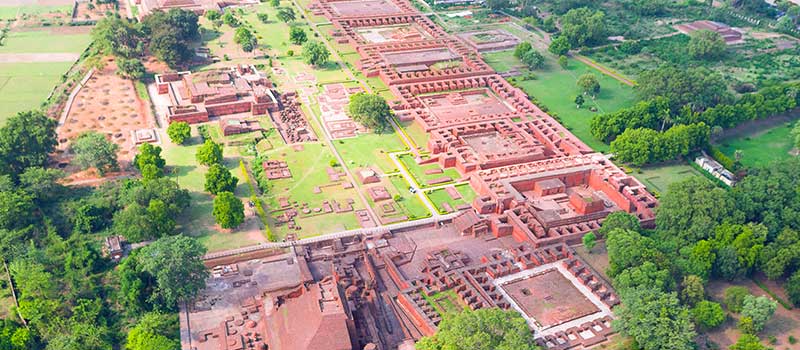
Nalanda University Ruins
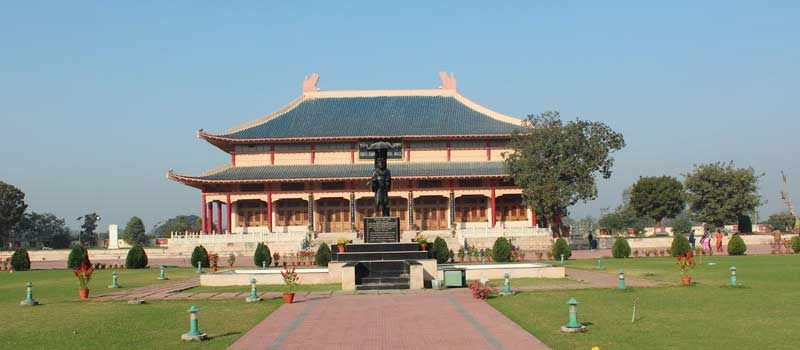
Hiuen Tsang Memorial Hall
Stupa of Sariputra
Stupa of Sariputra
surya mandir nalanda
Surya Mandir Nalanda

Nalanda, Bihar

  • Temperature :
    Summer: April – June: 28°C – 40°C
    Monsoon: July – September: 22°C – 32°C
    Winter: October – March: 10°C – 25°C
  • Top Tourist Places:
    Nalanda University Ruins, Nalanda Archaeological Museum, Hiuen Tsang Memorial Hall, Nalanda Multimedia Museum, Stupa of Sariputra, Nav Nalanda Mahavihara, Surya Mandir

Overview of Nalanda

Nalanda is one of the most renowned historical and religious sites of India. Most importantly, it is referred to as a great Buddhist learning center. Individuals of every nationality visit here to learn its spiritual and educational heritage.

Above all, Nalanda had its own ancient Nalanda University. This was the pioneer residential university in the world. In other words, monks, scholars, and students were residing here to study philosophy, logic, medicine, and scriptures.

The reason why pilgrims go to Nalanda is that it has close relations with Buddhism. Lord Buddha used to visit this place in person a few times. Furthermore, numerous Buddhist monks, such as the great teacher Nagarjuna, also attended school here. Thus, Nalanda is still a holy place among the Buddhists.

That is, Nalanda is not necessarily about ruins. It is of the immortal soul of learning and piety. Moreover, the travelers praise its buildings, sculptures, and serene environment. Indicatively, the ruins of stupas, monasteries, and classrooms give visitors an idea of its glorious history.

Most importantly, when visiting Nalanda Trip, people can discover religion and history simultaneously. It is an adventure in which wisdom encounters faith. Finally, Nalanda is the image of the golden legacy of India that can attract tourists and spiritual travelers.

Nalanda History

Nalanda was founded in the 5th century CE. On the one hand, it was established by Kumaragupta I of the Gupta dynasty. The university gradually became the most famous learning center in the world.

Nalanda University had over 10,000 students and 2,000 teachers at its peak. They were Indians, Chinese, Koreans, Japanese, and Tibetans. For example, renowned Chinese traveler Hiuen Tsang taught and studied here in the 7th century. He extolled Nalanda with its extensive library and disciplined way of life.

The Nalanda curriculum was quite advanced. Students studied Buddhist scriptures, philosophy, mathematics, astronomy, medicine, and grammar. Furthermore, there was a vast library in the university named Dharmaganja. This library was classified into three sections: Ratnasagara, Ratnadadhi, and Ratnaranjaka.

Meanwhile, Nalanda remained thriving during the Pala dynasty. Kings such as Dharmapala and Devapala helped it to grow. In the 12th century, however, Nalanda was invaded and destroyed by Bakhtiyar Khilji. Thus, the great library containing thousands of manuscripts was burned, and the university declined.

The history of Nalanda, in other words, is both glorious and tragic. It was a light to the world in study, and its downfall was the death of a time. Finally, Nalanda is a proud reminder of the ancient knowledge and cultural power of India.
Attractions:

Nalanda has several attractions that unite history and spirituality. Among the key highlights are:

  • Nalanda University Ruins: The ruins of monasteries, stupas, and classrooms.
  • Nalanda Archaeological Museum- contains rare coins, statues, and sculptures.
  • Hiuen Tsang Memorial Hall: This hall was constructed in dedication to the Chinese scholar.
  • Nalanda Multimedia Museum: Provides audio-video exhibitions about the history of Nalanda.
  • Stupa of Sariputra - A sacrificial place dedicated to a disciple of Buddha named Sariputra.
  • Nav Nalanda Mahavihara is a contemporary university that supports the study of Buddhism.
  • Surya Mandir is a temple of the Sun God that has old idols.
  • Nearby Rajgir - Frequently visited along with Nalanda, because of its Buddhist affiliation.

Getting There

Trains, roads, and air also connect Nalanda and can be easily reached.

By Train Nalanda

By Train

The closest railway station is the Nalanda Railway Station, just 2 km (approximately) near the ruins. Another good option is Gaya Junction (95 km away) and Rajgir Station (12 km away). By train, these stations are linked to large cities such as Patna, Kolkata, and Delhi.

By Air Nalanda

By Air

Nalanda is approximately 90 km away from the Gaya International Airport. It is linked to Delhi, Kolkata, and overseas flights like Bangkok. Another alternative is Patna Airport, 90 km away. There are taxis and buses at both airports.

By Road Nalanda

By Road

Nalanda can be reached by road easily. State-run buses and private cabs operate out of Patna, Rajgir, Bodh Gaya, and other towns. For example, the road journey between Patna and Nalanda is approximately 2 hours.

Best Time to Visit

Summer Season in Nalanda

Summer (March to June):

Summer is very hot, and it can be 40 °C. It may be hard to sightsee during the day. But in the morning and evening, short visits may be undertaken.

Monsoon Season in Nalanda

Monsoon ( July to September):

Nalanda is moderately rainy in the monsoon. Ruins and surroundings are turned green and fresh. As an example, the campus is gorgeous at this time of year. Conversely, however, heavy rains can be inconveniencing.

Winter Season in Nalanda

Winter (October to February):

But above all, winter is the most suitable season to visit Nalanda. The temperatures are between 8 °C and 25 °C. Hence, the climate favors visiting ruins, museums, and other attractions. In addition, this is the season of maximum tourist flow, where various cultural events are held.

RECOGNIZED AND ACCREDITATION

ministry of tourism
TAAI - Certificates
IATA - Certificates
patners