Rajgir Travel Guide

  • Best time to visit:
    October to March
  • Ideal Duration:
    2-3 days
  • Visa:
    Not Required
5.0 - Excellent in TripAdvisor
Recommended by 99% of travelers
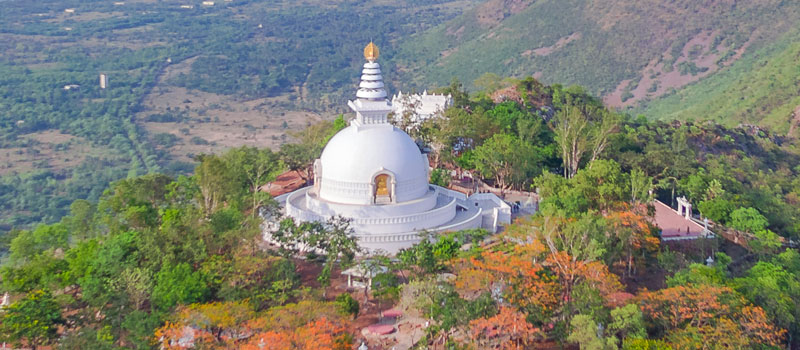
Nalanda, Viswa Shanti Stupa Rajgir
Viswa Shanti Stupa Rajgir
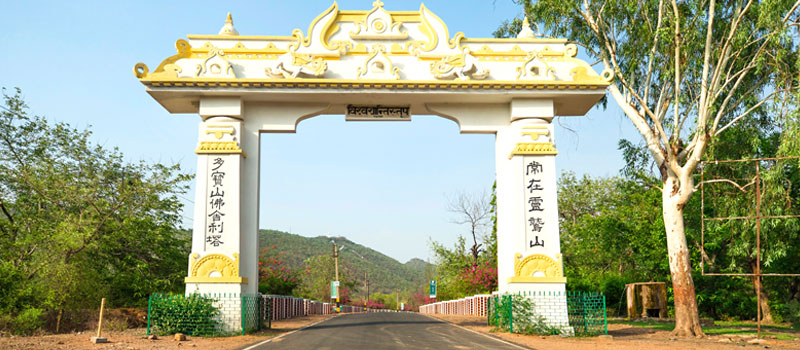
Viswa Shanti Stupa Gate
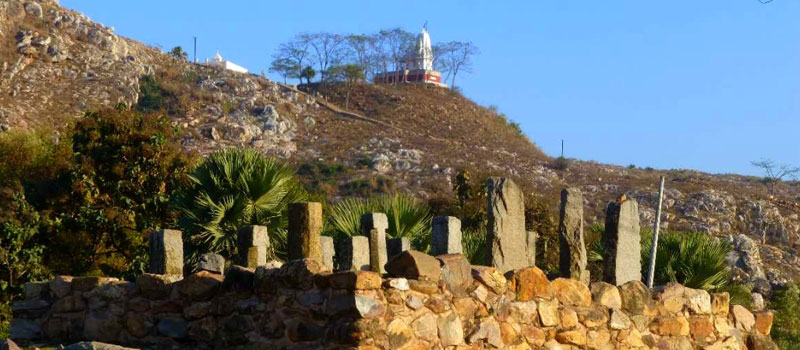
Griddhakuta Hill
Griddhakuta Hill
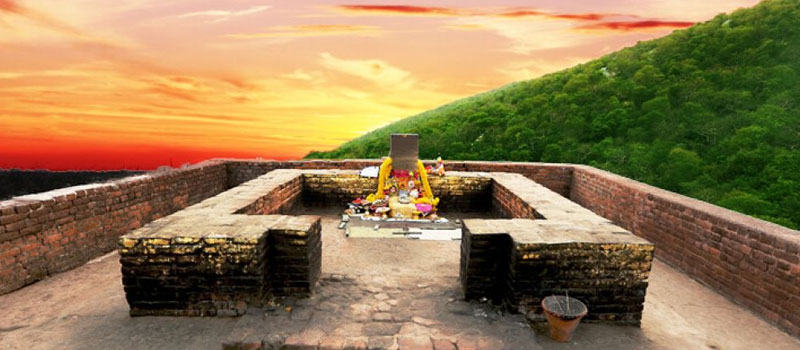
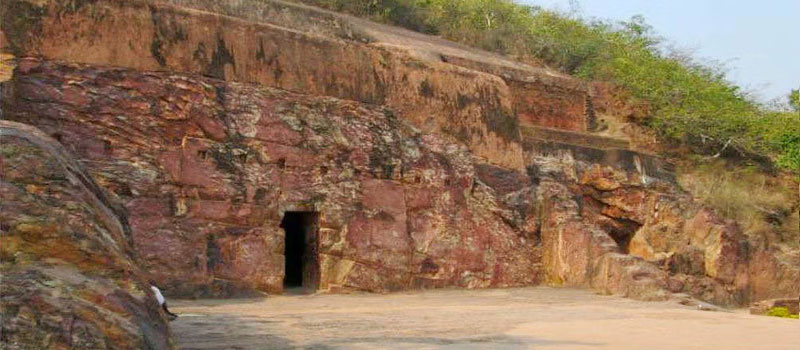
The Jail of Bimbisara
Ajatshatru Fort
Ajatshatru Fort

Rajgir, Bihar

  • Temperature :
    Summer: April – June: 28°C – 40°C
    Monsoon: July – September: 22°C – 32°C
    Winter: October – March: 10°C – 25°C
  • Top Tourist Places:
    Griddhakuta Hill, Vishwa Shanti Stupa, Hot Water springs, The Jail of Bimbisara, Mango Grove of Jivaka, Ajatshatru Fort

Overview of Rajgir

Rajgir is among the most holy spots in Bihar. Most importantly, both Buddhists and Jains are essential. This was an ancient town that used to be the capital of Magadh. That is why it is full of history, spirituality, and culture.

Above all, it is in Rajgir that Lord Buddha spent several years instructing his followers. The Vulture Peak or the Griddhakuta Hill is the place where Buddha delivered some sermons. This means that Rajgir was a vital place in which to propagate the Buddhist religion. In the same way, Jains consider Rajgir sacred since this is where Lord Mahavira, the 24th Tirthankara, once resided.

Moreover, another mythology associated with the Hindus is also named Rajgir. They believe that Lord Krishna had come this way. It has thus become a religious tourism site for individuals of most religions.

An example is when pilgrims meditate at Rajgir and walk through historic sites. It is unique due to the availability of hot springs, monasteries, and temples. In addition to that, the serene atmosphere appeals to both spiritualists and travellers.

Most importantly, Rajgir is not only a religious place, but also a place of peace and healing. Hot water springs are said to be of medicinal value. In brief, a Rajgir Trip is a spiritual and natural site that attracts any type of visitor.

Rajgir History

Rajgir has a rich and old history. It was referred to as Rajgriha or House of Kings. On the one hand, it was the capital of Magadh until the 5th century BCE. Then, the seat of government was removed and placed in Pataliputra, or Patna.

Rajgir was a great seat of learning in the days of Buddha. As an example, Buddha preached on numerous occasions at Griddhakuta hill. King Bimbisara of Magadh was a great patron of Buddha. This led to the popularity of Buddhism in the center of Rajgir.

Similarly, here Jainism also originated. In Rajgir, Lord Mahavira spent 14 years meditating and preaching his teachings. As such, both religions have a holy place at Rajgir.

Moreover, Hindu epics such as the Mahabharata refer to Rajgir. It has been said that Lord Krishna and the Pandavas visited this town. In addition, the stone-built Rajgir fort walls are dated to those periods.

In the meantime, Emperor Ashoka came to Rajgir in the Mauryan period. He constructed buildings and helped propagate Buddhism in this area. Later, the town remained a destination for scholars and monks who came from Asia.

There have been kings, saints, and scholars in Rajgir. Its tradition is closely related to history and religion. To sum it up, Rajgir is a living heritage of culture, spirituality, and ancient heritage.
Attractions:

Rajgir is also a land of attractions that are very important culturally and religiously. Here are the main highlights:

  • Griddhakuta Hill (Vulture’s Peak) - Place where Buddha gave sermons.
  • Vishwa Shanti Stupa- A magnificent white stupa constructed on Ratnagiri Hill.
  • Hot Water springs: Natural springs that have curative effects.
  • The Jail of Bimbisara- The Jail associated with King Bimbisara.
  • Mango Grove of Jivaka is an ancient place where Buddha was treated with medicine.
  • Ajatshatru Fort was constructed by King Ajatshatru in the 5th century BCE.
  • Cyclopean Wall - The ancient wall of Rajgir is 40 km long and made of stone.
  • Jain Temples on Hills -Holy temples of Jain devotees.

Getting There

Rajgir is accessible by rail, road, and air.

By Train Rajgir

By Train

There is a railway station in Rajgir. It is linked to Patna, Gaya, and Kolkata. Moreover, wider connectivity is available at Gaya Junction (approximately 78 km away) and Patna Junction (approximately 100 km away). At these stations, there are taxis and buses.

By Air Rajgir

By Air

Gaya International Airport is 78 km away, the closest airport. It flies between cities such as Delhi, Kolkata, and Varanasi. In addition to this, there is Patna Airport, which is approximately 100 km away at Rajgir. It is well linked to the big cities in India. Upon arrival, visitors can use a taxi or a bus to reach Rajgir.

By Road Rajgir

By Road

Rajgir can be reached easily by road. It is linked to Patna, Gaya, Nalanda, and other neighboring towns by highways. There are regular state buses and taxis that run on such routes. An example is the 3-hour drive between Patna and Rajgir.

Best Time to Visit

Summer Season in Rajgir

Summer (March to June):

Rajgir is hot and dry during the summer months. Temperatures often reach 40°C. It is therefore not the most comfortable time of the year to see outdoor attractions. Evenings and mornings, however, may be pleasant moments to make a quick visit.

Monsoon Season in Rajgir

Monsoon ( July to September):

The rainfall during the monsoon season is moderate to heavy in Rajgir. The environment is made green and cool. As an example, hills and temples are also beautiful during this season. Travel, however, can be strenuous because of slippery paths. However, when you appreciate natural beauty, you can enjoy the season.

Winter Season in Rajgir

Winter (October to February):

Above all, winter is the season most preferred for visiting Rajgir. The temperature is 6 °C to 25 °C. So, there is good weather to explore, meditate, and hike to the hills. Besides, it is the high season for tourists, and numerous festivals are held during this period.

RECOGNIZED AND ACCREDITATION

ministry of tourism
TAAI - Certificates
IATA - Certificates
patners