Overview of Trimbakeshwar
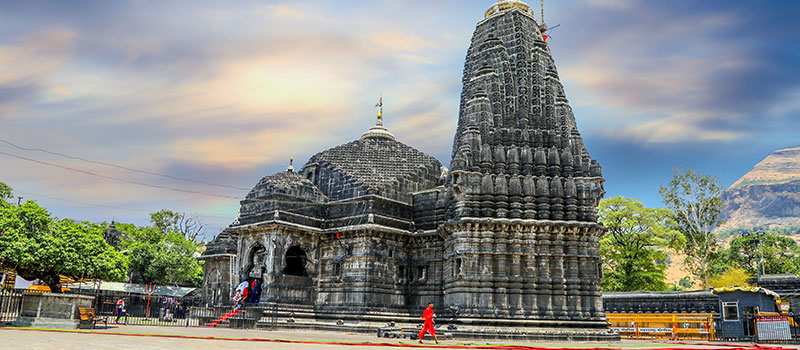
The Trimbakeshwar is one of the 12 Jyotirlingas in India and is located in the Nashik district of Maharashtra. Most importantly, it is a holy place of immense spiritual significance, where Lord Shiva is worshipped as Trimbakeshwar Mahadev. Pilgrims are convinced that by visiting this sacred shrine, one is cleansed of sins and is liberated. Thus, the worshipers of the entire country come here to get the blessings and tranquillity.
The temple lies at the foot of the Brahmagiri range, where the sacred Godavari River is born. That is, it is not only a religious place, but also a natural beauty place. Above all, the temple is essential in rituals such as Narayan Nagbali, Kalsarpa Shanti, and Rudrabhishek. Therefore, many visit this place to conduct ancestor rites and special ceremonies.
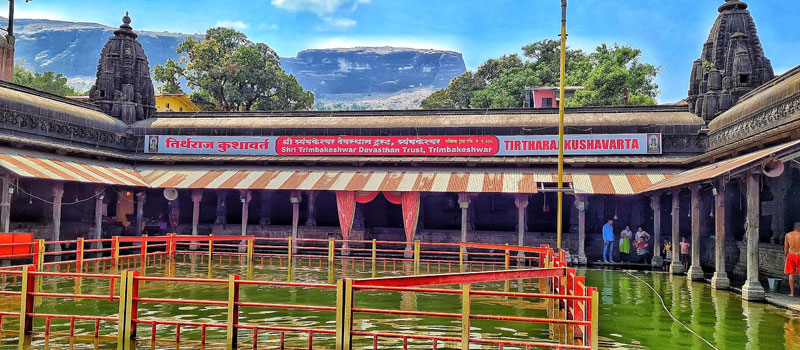
For example, the special Shivlinga in the temple is three-faced, depicting Brahma, Vishnu, and Mahesh. Similarly, the black stone buildings with their elaborate carvings are magnificent Maratha. Another sacred ritual pilgrims participate in is the Kushavanta Kund, the origin of the Godavari, which is deemed as holy as the Ganga.
Indeed, a Trimbakeshwar Trip is not just a travel. It is a journey of belief, ritual, history, and worship in a single holy place. Stated briefly, it provides spiritual power and cultural diversity.
Trimbakeshwar History
Trimbakeshwar has a long history that is entrenched in Hindu mythology as well as in Maratha traditions. First, the legends state that the Godavari River started flowing at this place following the penance of Sage Gautam. This means that Lord Shiva came and gave blessings to the sage, and the holy Jyotirlinga was set up. Secondly, this ensured that Trimbakeshwar was a permanent place of worship.
Peshawabaji Baji Rao constructed the current temple during the 18th century. It is a fine specimen of Maratha architecture, built of black basalt. In addition, there are elaborate sculptures and dainty carvings on the temple walls. An example is the stone pillars and domes that show the art of that era.
Moreover, in ancient times, Trimbkeshwar was referred to in texts like the Skanda Purana. The pilgrims think that prayers here aid in the achievement of Moksha. Moreover, the temple is where Vedic rites and astrology-related rituals are performed.
The temple, however, is an aspect of worship as well as cultural heritage. Likewise, it is still governed by centuries-old rituals. In the meantime, thousands of worshippers attend Mahashivratri and other annual festivals. Then, Trimbakeshwar becomes an international pilgrimage destination to the Kumbh Mela, held there once every 12 years in Nashik.
To sum up, the temple's history can be described as some divine mix of myth, architecture, and tradition that will remain in the souls of millions.
Attractions:
Trimbakeshwar has spiritual places and natural beauties. The major attractions include the following:
- Trimbakeshwar Temple: The Jyotirlinga temple with its three-faced lingam.
- Kushavarta Kund: A Holy tank that supposedly cleanses the sins.
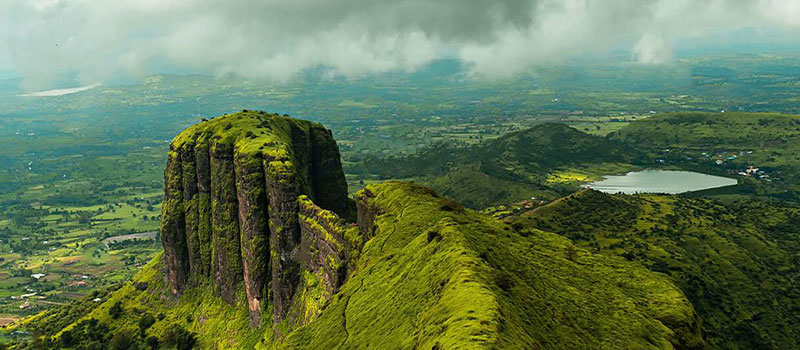
- Brahmagiri hill: source of the sacred Godavari river.
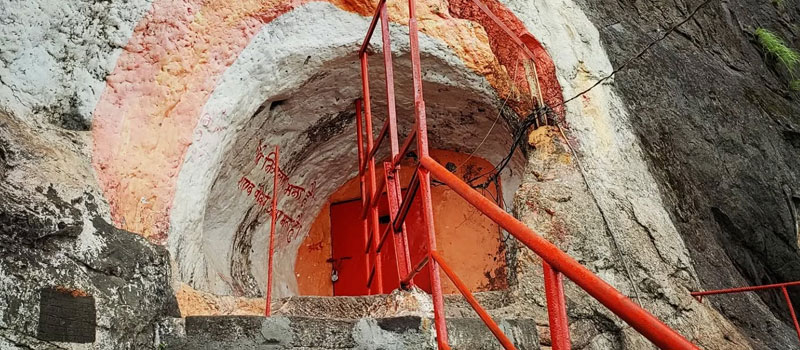
- Gangadwar: Prehistoric caves associated with river myths.
- Anjaneri Hills: It is considered to be the place where Lord Hanuman was born.
- Neel Parbat: It is famous for trekking and scenic.
- Gufa of Goraknath: Dwelling place of saints and yogis.
- Local Ritual Centres: Places for Kalsarpa Shanti and Narayan Nagbali pujas.